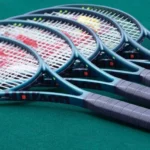


Your tennis strings don’t need to snap to be finished. In fact, most strings lose a significant chunk of their tension — and with it, their playability — long before they actually break. If you’ve ever felt like your shots are suddenly landing shorter, your control has gone fuzzy, or the ball just feels dead off the stringbed, your strings were probably done hours of play ago.
So how long do tennis strings actually last? The honest answer: it depends on the string type, how often you play, how hard you hit, and even how you store your racket. Below, I’ll break it all down from a stringer’s perspective — no fluff, just practical guidance you can use.
The Classic Rule of Thumb
There’s an old guideline that works surprisingly well as a starting point: restring your racket as many times per year as you play per week. So if you play three times a week, aim for at least three restrings a year.
It’s a decent baseline, but it doesn’t account for string type, playing style, or conditions. A heavy topspin hitter grinding through polyester will chew through strings far faster than a flat-hitting club player on multifilament. Let’s get more specific.
For a deeper dive into restringing frequency, see our full guide: How Often Should You Restring a Tennis Racket?
How Long Do Strings Last by Type?
Not all strings are built the same. Here’s a realistic breakdown of how many hours of play you can expect from each type before performance drops off noticeably.
Polyester (10–20 hours of play)
Polyester is the most popular string type among intermediate to advanced players, and for good reason — it offers excellent spin potential and control. The trade-off? It goes dead relatively quickly. Poly strings lose tension faster than any other type, and once they do, you lose the crisp response that made them feel great in the first place.
Popular polys like Babolat RPM Blast, Solinco Hyper-G, and Luxilon ALU Power typically offer 10–20 hours of quality play, depending on gauge, tension, and your swing style. Heavy topspin players on thin gauges might get closer to 10 hours; flatter hitters on thicker gauges can stretch it further.
We stock all three at our East London studio — Babolat RPM Blast and Solinco Hyper-G are available from £40 installed, along with Luxilon ALU Power. For more on how polyester compares to multifilament, we’ve written a detailed comparison.
Multifilament (15–30 hours of play)
Multifilament strings are made from hundreds of tiny fibres woven together, mimicking the feel of natural gut at a fraction of the cost. They’re softer, more forgiving on the arm, and hold their playability longer than polyester — though they’re more prone to fraying and eventual breakage.
Wilson Sensation Plus is a solid, affordable multi that we stock at £25 installed. If you’re after a premium option, Tecnifibre NRG2 is widely regarded as one of the best multifilaments on the market — silky feel, excellent comfort, and decent tension maintenance. You can expect 15–30 hours of quality play from most multis.
If you’re not sure which type suits you, our guide on how to choose tennis strings covers everything you need to know.
Synthetic Gut (15–25 hours of play)
Synthetic gut is the workhorse of the string world — affordable, predictable, and perfectly adequate for recreational and club-level players. It’s a single solid core wrapped in an outer layer, offering a balanced blend of power, comfort, and durability.
Babolat Synthetic Gut is a reliable choice and one we keep in stock at £25 installed. You’ll typically get 15–25 hours of play before it starts to feel noticeably flat. It won’t wow you with spin or feel, but it does the job consistently and won’t empty your wallet.
Natural Gut (20–40 hours of play)
Natural gut is the gold standard for feel, power, and tension maintenance. Made from cow intestine (yes, really), it holds tension better than any synthetic string and provides an unmatched playing experience. You can expect 20–40 hours of quality play.
The catch? It’s expensive (typically £50–70 for the string alone), and it doesn’t love moisture. If you play outdoors in the British weather, natural gut demands more care. Many players use it as a main string in a hybrid setup to balance cost and performance.
Kevlar (40+ hours of play)
Kevlar strings are virtually indestructible. If you’re a chronic string breaker, Kevlar will outlast everything else — 40 hours of play and beyond is standard. However, it’s extremely stiff and harsh on the arm. Most players who use Kevlar pair it with a softer cross string to take the edge off. It’s a niche choice, but it has its place.
What Shortens String Life?
Even the most durable string won’t last if conditions work against it. Here are the biggest factors that accelerate string deterioration:
- Heavy topspin: The more you brush the ball, the more the strings move and notch against each other. This is the number one cause of premature breakage in polyester strings.
- High string tension: Strings at higher tensions are under more stress and lose tension faster. They also break sooner.
- Heat and humidity: Warm, humid conditions soften strings and accelerate tension loss. This is particularly relevant if you play outdoors during summer.
- Leaving your racket in the car boot: This is the big one. Temperatures inside a parked car can easily exceed 50°C in summer. That kind of heat can destroy string tension in hours — far more than a few sessions on court would.
- Thinner gauges: A 1.20mm string will break faster than a 1.30mm string. You’re trading durability for feel and spin.
Durability Kings: Which Strings Last Longest?
If longevity is your priority — whether you’re a string breaker or just don’t want the hassle of frequent restrings — these are worth a look:
- Luxilon 4G: One of the most durable polys on the market. It holds tension well relative to other polyesters and takes a proper beating before giving out. Available at our studio from £40 installed.
- Solinco Confidential: A stiffer poly designed for durability and control. Popular with heavy hitters who want a string that lasts. Also £40 installed at PT.
- Gamma Ocho: An octagonal-shaped poly that grips the ball well and outlasts many competitors in its price bracket. We stock it at just £30 installed — great value for a durable, spin-friendly string.
Other durable options worth mentioning include Kirschbaum Max Power and Tourna Big Hitter Black7, both known for holding up well over extended use.
Signs Your Strings Are Done
Don’t wait for a break. Here are the telltale signs your strings have run their course:
- The ball feels dead or flat off the stringbed
- You’re losing control — shots spray more than usual
- Visible notching where the mains and crosses intersect
- The strings feel loose or move out of position easily
- You’re having to swing harder to generate the same depth
We’ve written a full breakdown with photos in our guide to the signs you need to restring your tennis racket.
Should You Wait for Your Strings to Break?
In a word: no.
This is one of the most common mistakes I see. Players assume their strings are fine until they snap, but by the time a string breaks, it’s been playing poorly for hours — possibly weeks. Polyester strings in particular lose a large percentage of their tension within the first few hours of play and continue to decline from there.
Playing with dead strings means less control, less spin, less power, and a higher risk of arm discomfort as you compensate by swinging harder. It’s false economy. A timely restring keeps your racket performing as it should and protects your arm.
If you’re an East London player who’s been putting off a restring, there’s never been a better time to sort it out.
How to Make Your Strings Last Longer
You can’t stop tension loss entirely, but you can slow it down:
- String at a slightly lower tension: Strings under less stress lose tension more slowly and last longer before breaking. Dropping 1–2kg from your usual tension can extend string life without a dramatic change in feel.
- Use a thicker gauge: Moving from 1.20mm to 1.25mm or 1.30mm adds durability. You’ll sacrifice a touch of spin and feel, but the string will hold up longer.
- Store your racket properly: Keep it indoors, at room temperature, away from direct sunlight and heat. Never leave it in the car boot.
- Use string savers: Small plastic inserts placed at string intersections reduce notching and can extend string life — particularly useful for polyester players.
- Consider a hybrid setup: Pairing a durable poly main with a softer cross string can give you the best of both worlds — spin and control from the mains, comfort and slightly better tension maintenance from the crosses.
Time for a Fresh Set?
If your strings have been in for a while — or you can’t remember when they were last done — they’re almost certainly past their best. A fresh set of strings transforms how a racket feels and plays. It’s the single best investment you can make in your game.
At PT Tennis, we offer stringing from just £20 (labour only with your own string), with popular strings installed from £25–£40. We’re based in the Distillery Building in Hackney Wick, with same-day turnaround available on most jobs.
Book your restring online or drop us a message on WhatsApp — we’re always happy to help you find the right string and tension for your game.