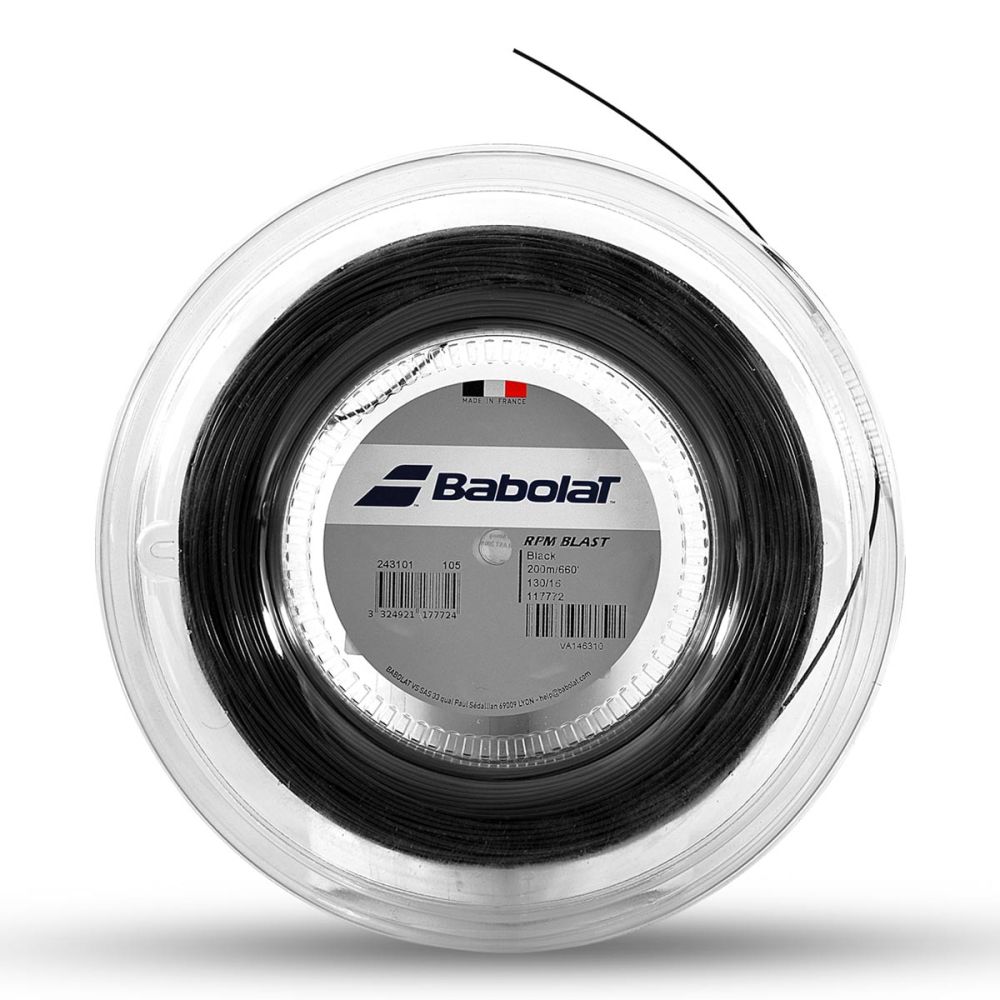

Babolat RPM Blast is one of the most widely used polyester strings in tennis. It has been the go-to choice for topspin baseliners since Nadal made it famous, and it remains one of the most requested strings we install at Restring London.
But is it the right string for you? This review covers how it actually plays, who it suits, who should avoid it, and how it compares to alternatives you might be considering.
Quick Verdict
RPM Blast is a firm, controlled co-polyester that rewards fast swings with heavy topspin and precise placement. It is not the most comfortable poly, not the most powerful and not the most durable — but for pure spin and control from the baseline, it is hard to beat. If you hit with consistent topspin and want a predictable, low-powered response, this string delivers.
Specs
| Spec | Detail |
|---|---|
| Brand | Babolat |
| Type | Co-polyester (monofilament) |
| Shape | Octagonal |
| Gauge | 16 (1.30mm), 17 (1.25mm), 18 (1.20mm) |
| Colour | Black |
| Stiffness | Medium-high |
| Price at Restring London | £40 (Tier 1, string + labour) |
Performance Ratings
| Category | Rating |
|---|---|
| Spin | ★★★★★ |
| Control | ★★★★★ |
| Power | ★★ |
| Comfort | ★★ |
| Durability | ★★★★ |
| Feel / Touch | ★★★ |
| Tension Maintenance | ★★★ |
How It Plays
Spin
This is where RPM Blast earns its reputation. The octagonal cross-section grips the ball and creates aggressive snapback. On full topspin groundstrokes, the ball dips sharply and kicks up after the bounce. If you consistently hit with a semi-western or western grip and swing low to high, RPM Blast will amplify your spin.
It is not quite as grabby as textured strings like RPM Blast Rough or heavily shaped strings like Solinco Hyper-G, but the spin is still excellent — and more predictable than some of the more extreme options.
Control
RPM Blast is a low-powered string. It does not launch the ball far, which means you can swing hard without worrying about hitting long. For aggressive baseliners, this is a significant advantage. You get directional precision and depth control that softer strings cannot match.
The trade-off: if you have a shorter or slower swing, RPM Blast can feel dead. You need to generate your own power. It will not help you hit deeper — it will just keep the ball in the court.
Comfort
This is RPM Blast’s weakest area. It is a firm, stiff poly. Fresh out of the machine it has some give, but after a few hours of play it begins to stiffen up. Players with arm concerns should consider softer alternatives like Luxilon Element or a multifilament.
Stringing at a lower tension (46–50 lbs) helps significantly. Avoid stringing RPM Blast above 52 lbs unless you know your arm can handle it.
Durability
Good but not exceptional. RPM Blast lasts well for a Tier 1 poly — most players get 15–25 hours of play before it either breaks or goes dead. Heavy string breakers may want to look at Solinco Confidential or Luxilon 4G for better durability.
The bigger issue is dead feel over time. RPM Blast loses its lively snap after 10–15 hours. The strings may still be intact, but the response becomes flat and boardy. If you play 2–3 times a week, plan to restring every 6–8 weeks for the best experience.
Feel and Touch
RPM Blast is a control string first and a feel string second. It gives good feedback on clean hits — you know where the ball is going. But on touch shots like drop shots and volleys, it can feel stiff and unforgiving compared to softer polys or multifilaments.
Players who spend a lot of time at the net may prefer Yonex Poly Tour Pro or Tecnifibre Razor Code, which offer similar control with slightly better touch.
Tension Recommendations
RPM Blast is tension-sensitive. Getting this right matters more than with most strings.
| Player Type | Recommended Tension |
|---|---|
| Big hitters / fast swings | 48–52 lbs |
| Club players / moderate swings | 46–50 lbs |
| Arm-conscious players | 44–48 lbs |
| Starting point if unsure | 48 lbs |
Key rule: String RPM Blast lower than you think. Most players who find it harsh are stringing too high. Dropping 2–4 lbs from your current tension can transform the feel.
For detailed tension advice, use our string calculator or read the tension guide.
Who RPM Blast Is For
- Topspin baseliners who swing fast and want control
- 4.0+ players who generate their own power
- Match players who want predictable shot placement
- Players upgrading from mid-range polys who want a tour-level feel
- String breakers who want a good balance of spin and durability
Who Should Avoid It
- Beginners — too stiff and low-powered for developing swings. Try synthetic gut or a soft multi instead
- Players with arm problems — the stiffness can aggravate tennis elbow. Try Luxilon Element or Wilson Sensation Plus
- Flat hitters — if you hit flat without much topspin, RPM Blast’s spin advantages are wasted and you just get a stiff, dead feel
- All-court players who volley often — limited touch at the net. Yonex Poly Tour Pro or a hybrid setup may suit better
How It Compares
RPM Blast vs Solinco Hyper-G
Hyper-G has a square profile that creates even more snapback and spin. It is also slightly more comfortable and lasts longer. RPM Blast has a more predictable, classic poly feel — less extreme but more consistent. If you want maximum spin and control, Hyper-G edges it. If you want a proven, reliable baseline control string, RPM Blast is the safer choice.
Our take: Hyper-G is our most popular string for a reason. But RPM Blast is a close second — many players who try both end up preferring the RPM Blast feel.
RPM Blast vs RPM Blast Rough
Same string with a textured surface. Rough grabs the ball more and creates slightly more spin, but wears faster and can feel less predictable. If you want maximum bite, go Rough. If you want consistency and clean control, standard RPM Blast is better.
Full comparison in our RPM Blast Rough review.
RPM Blast vs Tecnifibre Black Code
Black Code is softer and slightly more powerful than RPM Blast, with decent spin. It is a better option for players who want poly control without the extreme firmness. We do not stock Black Code, but if you bring your own, we will string it for £20 (labour only).
RPM Blast vs Yonex Poly Tour Pro
Poly Tour Pro has better feel and touch, especially at the net. It is slightly less spin-friendly than RPM Blast but more comfortable and versatile. A good alternative for all-court players who want poly control without sacrificing feel.
RPM Blast vs Luxilon ALU Power
ALU Power is the other “tour standard” poly. It has a crisper, more connected feel and better touch than RPM Blast, but slightly less raw spin. ALU Power suits players who want precision and feel. RPM Blast suits players who want spin and safety. Both are Tier 1 strings at £40.
Full comparison in our ALU Power review.
Durability and Lifespan
| Play Frequency | Expected Lifespan |
|---|---|
| 1x per week | 3–4 months |
| 2x per week | 6–8 weeks |
| 3x per week | 4–6 weeks |
| 4+ per week | 3–4 weeks |
How it wears: RPM Blast notches gradually at the cross points. You will feel the string go dead (loss of snapback and depth) before it actually breaks. Replace when it feels flat — do not wait for it to snap.
For more on timing, read signs you need to restring.
Final Verdict
Babolat RPM Blast is a proven, reliable control poly that has earned its tour-standard reputation. It does what it does very well: topspin, control, directional precision. It does not pretend to be comfortable, powerful or arm-friendly.
If you are a topspin baseliner with a fast swing, RPM Blast is a safe, excellent choice. If you need comfort, power or versatility, look elsewhere.
Rating: 8.5/10 — Excellent for its intended audience. Just make sure you are that audience.
Book a Restring
Want to try RPM Blast? Available as a Tier 1 string at £40 including string and labour.
- Use the string calculator for a tension recommendation
- Message us on WhatsApp for advice
- Book a drop-off at Distillery Building, E3 2AL
We serve players across Bow, Hackney, Stratford, Mile End, Victoria Park and East London.